Teen Therapy in West Michigan: A Guide for Parents and Adolescents
Teen Therapy in West Michigan: A Guide for Parents and Adolescents
Adolescence has always been complicated. But for today's teens in West Michigan — navigating social media pressure, post-pandemic social disruption, academic stress, and identity development — it can feel overwhelming. Teen mental health rates have declined significantly over the past decade, and many families don't know where to turn.
This guide is for parents who are worried about their teenager, and for teens themselves who are wondering if therapy could help.
Signs a teen might benefit from therapy
For parents to watch for:
- Significant withdrawal from family, friends, or activities they used to enjoy
- Sudden drop in grades or school engagement
- Increased irritability, anger, or emotional outbursts beyond typical teen behavior
- Sleep disruption — sleeping far too much or struggling to sleep
- Changes in eating patterns or weight
- Expressing hopelessness, worthlessness, or statements like "I wish I wasn't here"
- Risky behaviors — substance use, self-harm, reckless choices
- Anxiety that interferes with school, friendships, or daily activities
Signs teens themselves might notice:
- Feeling sad, empty, or numb most of the time
- Anxiety that won't quit, even about small things
- Difficulty feeling connected to people around you
- Struggling with identity, sexuality, or fitting in
- Using substances to cope
- Feeling like no one understands you
What does teen therapy look like?
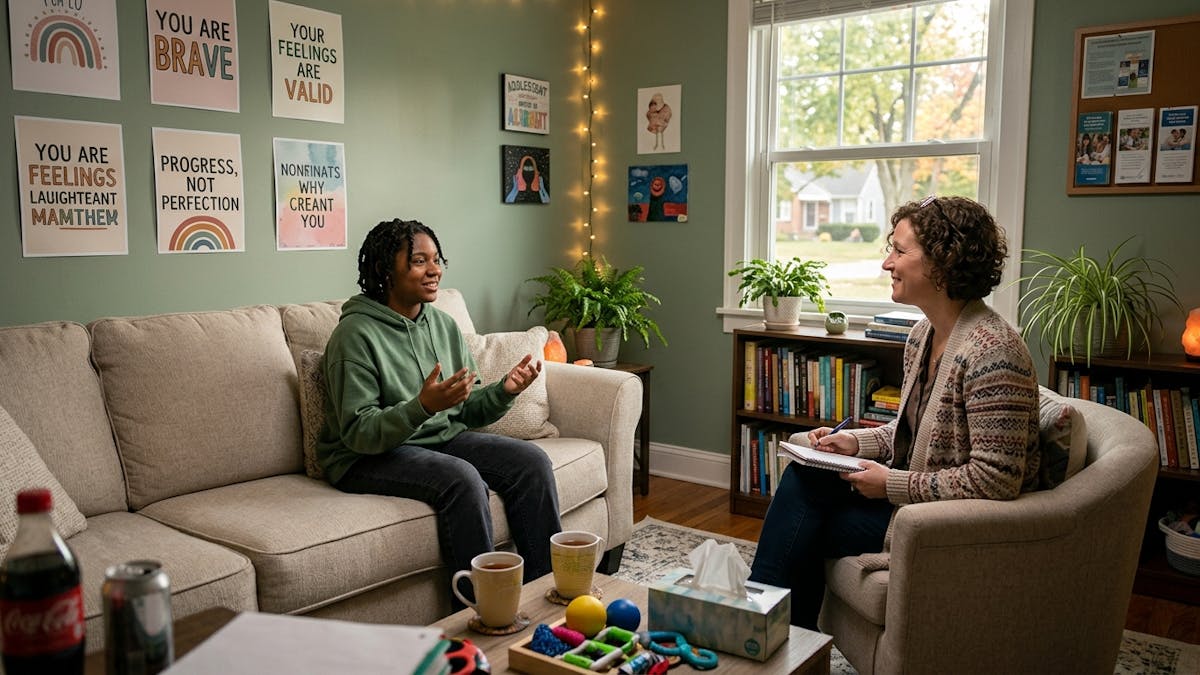
Good adolescent therapy is different from adult therapy — skilled teen therapists know how to meet young people where they are. Sessions might include:
- Talk therapy in a low-pressure, judgment-free setting
- Creative or expressive techniques (art, music, writing) for teens who find talking hard
- CBT skills for anxiety and depression management
- DBT skills for emotional regulation
- Family sessions when family dynamics are part of the picture
Most teen therapy sessions are confidential — the therapist won't share session details with parents unless there's a safety concern. This confidentiality is often what allows teens to open up.
Involving parents in teen therapy
The therapist will typically want occasional parent check-ins without the teen present — not to share what the teen said, but to gather context and coordinate support. Good teen therapists help families communicate better as a whole.
Finding a teen therapist in West Michigan
When searching for a therapist for your teenager:
- Look specifically for therapists with adolescent experience — not just adult therapists who "also see teens"
- Check whether they use DBT, CBT, or other evidence-based adolescent approaches
- Ask about their process for involving parents
- Consider the teen's input — a teenager who feels forced into therapy they had no say in is less likely to engage
West Michigan school-based resources
- Many Grand Rapids, Holland, and Muskegon school districts have counselors on staff
- Kent County Community Mental Health (Network180) serves teens from all income levels
- Pine Rest Christian Mental Health Services has extensive adolescent programs throughout West Michigan
Crisis resources for teens in Michigan
If your teen is in immediate distress:
- 988 Suicide & Crisis Lifeline: Call or text 988
- Crisis Text Line: Text HOME to 741741
- Spectrum Health emergency psychiatric services: 616-391-2000
Explore teen-focused therapists in Grand Rapids, Holland, or Muskegon. Or learn about what therapy costs and insurance covers.
Frequently asked questions
At what age can a teen start therapy in Michigan?
Teens of any age can participate in therapy. In Michigan, minors generally need parental consent to begin therapy. However, teens aged 14 and older can consent to mental health treatment without parental involvement in certain circumstances, particularly regarding substance abuse.
Will the therapist tell my parents what I say?
Teen therapy is confidential. Therapists don't share session content with parents unless there's a serious safety concern (such as risk of self-harm or harm to others). This confidentiality is intentional — it's what allows teens to speak honestly.
My teen refuses to go to therapy. What do I do?
Start by listening without pushing. Ask what concerns them about it. Let them have input in choosing the therapist. Frame it as support, not punishment. In some cases, a therapist can have a casual first meeting to just 'talk' without formal commitment. Individual therapy for you as a parent can also help you navigate the relationship.